Pramac Battery Banks
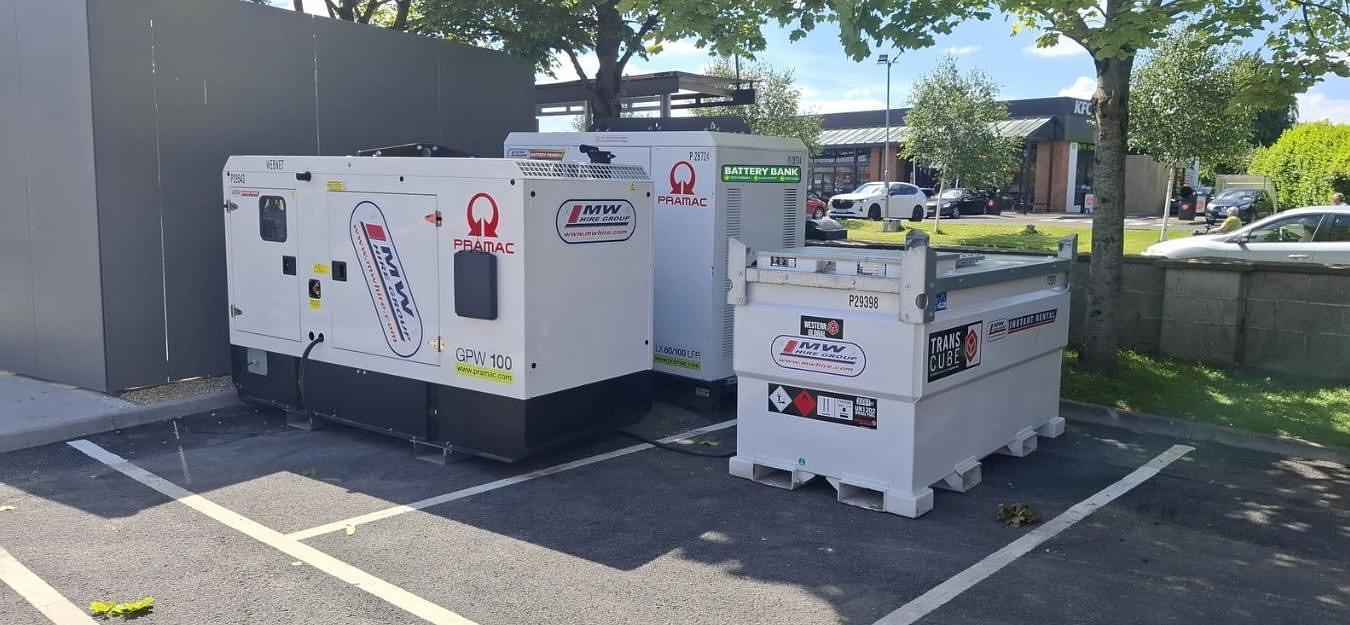
Pramac Battery Banks: Sustainable Power That Lowers Operating Costs for Sites and Businesses
Energy reliability and cost control have become board-level priorities for many organisations, from construction contractors and facilities teams to logistics operators and SMEs managing multiple sites. Fuel price volatility, grid constraints, emissions targets, and tighter regulations are changing how businesses think about temporary and permanent power.
Pramac battery banks (battery energy storage systems designed for commercial and industrial use) are increasingly central to this shift. When integrated into a site’s energy strategy—either alongside the grid, generators, or renewable sources—battery banks can reduce fuel consumption, cut peak demand charges, improve uptime, and support measurable sustainability goals.
What Are Pramac Battery Banks (and Why Are They Different From “Just Batteries”)?
A battery bank for business use is more than a collection of cells. It is a complete battery energy storage system (BESS) that typically includes the battery modules, power electronics, safety systems, controls, and interfaces that allow charging and discharging based on site demand.
In practical terms, Pramac battery banks are used to store energy when it is cheapest or cleanest and deliver it when it is most valuable—such as during peak demand, when equipment starts up, during grid interruptions, or when a generator would otherwise need to run inefficiently at low load.
The Sustainability Case: Lower Emissions, Less Noise, Better Compliance
For many organisations, sustainability is no longer optional. Customers, investors, and procurement frameworks increasingly require evidence of reduced environmental impact and a clear plan for continuous improvement. Battery banks contribute in several direct, measurable ways.
1) Reduced Fuel Burn and Lower Carbon Emissions
On sites that rely on diesel generators—common in construction, events, remote operations, and contingency planning—battery banks can significantly reduce generator runtime. Instead of keeping a generator running to handle variable loads, a battery can handle fluctuations while the generator runs at a more efficient set point or remains off until needed.
The result is typically a reduction in fuel consumption and associated CO2 emissions, as well as lower particulate and NOx emissions—key for sites operating near population centres or within regulated areas.
2) Enabling Renewable Integration
Solar and wind generation are valuable, but intermittent. Pairing renewables with a Pramac battery bank helps capture excess energy and use it later, improving self-consumption and reducing reliance on fossil-fuel backup. For businesses aiming to increase renewable usage without compromising operational certainty, storage is often the missing piece.
3) Quieter, Lower-Impact Operations
Noise restrictions can limit operating hours on urban projects and sensitive sites. Battery banks provide quiet power for evening work, early starts, or low-load periods when a generator would be disproportionate. Reduced noise also improves working conditions and community relations.
The Cost-Control Case: How Battery Banks Keep Energy Spend Down
Beyond sustainability, the commercial argument is straightforward: battery storage can reduce both direct energy costs and indirect operational costs. The most compelling savings typically come from a combination of the following.
1) Peak Shaving: Reduce Maximum Demand Charges
Many commercial electricity tariffs penalise high peak demand. A short spike from starting machinery, HVAC cycling, or simultaneous equipment operation can raise costs for an entire billing period. Battery banks can supply power during these peaks, keeping grid draw below costly thresholds.
This strategy—known as peak shaving—is one of the fastest ways to turn energy storage into predictable savings for businesses with demand-based billing.
2) Load Shifting: Use Cheaper Off-Peak Power
Where time-of-use tariffs apply, a battery can charge during off-peak periods and discharge when rates are higher. This load shifting approach can stabilise energy spend and reduce exposure to price fluctuations, particularly for multi-shift operations.
3) Generator Optimisation and Reduced Maintenance
Generators are often least efficient when running under light or variable loads. Battery banks smooth out demand, allowing generators to:
- Run fewer hours overall
- Operate at more efficient load levels
- Reduce wet stacking risks and wear from low-load running
Lower runtime and improved operating conditions often translate into reduced servicing requirements, fewer callouts, and longer generator life—important contributors to total cost of ownership.
4) Better Resilience, Fewer Disruptions
Outages are costly, whether they stop a production line, disrupt IT systems, or delay a construction schedule. Battery storage can provide seamless bridging power during grid interruptions or generator changeovers, improving operational continuity and reducing the financial impact of downtime.
Where Pramac Battery Banks Deliver the Most Value
Battery banks can support a wide range of environments, but they tend to offer the strongest return where energy demand is variable, reliability matters, or emissions constraints are tight.
Construction and Temporary Sites
Construction power demand is rarely steady—equipment starts and stops, cabins and lighting fluctuate, and work phases change. Battery banks help reduce generator fuel use, support quiet operation during restricted hours, and keep projects moving when site conditions change.
Industrial and Commercial Facilities
Manufacturing plants, warehouses, and multi-tenant buildings can use battery storage to manage demand peaks, support critical loads, and improve energy budgeting. For organisations with sustainability reporting requirements, storage can also support carbon reduction initiatives alongside efficiency upgrades.
Events, Hospitality, and Public Venues
Events often require reliable power with strict noise and air-quality considerations. Battery banks can power low-load applications quietly and cleanly, reducing generator dependency and improving visitor experience.
Telecoms, Data, and Critical Infrastructure
Any operation that cannot tolerate interruptions benefits from fast-responding stored energy. Battery banks can complement existing backup systems, enhance power quality, and support planned maintenance without service disruption.
How to Make Battery Storage Truly Sustainable (Not Just “Green-Looking”)
To ensure a battery strategy stands up to scrutiny—internally and externally—sustainability must include both operational performance and lifecycle responsibility.
- Right-sizing: An oversized system can raise costs and embodied impact without proportional benefits; undersizing limits savings and resilience.
- Smart controls: The best financial outcomes typically come from intelligent charging/discharging aligned to tariffs, load profiles, and site constraints.
- Lifecycle planning: Consider expected duty cycles, monitoring, maintenance, and end-of-life handling as part of procurement, not an afterthought.
- Integration with renewables: Pairing storage with solar (and, where suitable, other renewables) often improves both sustainability outcomes and long-term cost stability.
Key Questions to Ask Before Choosing a Pramac Battery Bank
Battery banks are not one-size-fits-all. A practical evaluation should start with a clear view of how energy is used on your site.
- What does your load profile look like? Identify peaks, typical baseload, and operational changes over a week or project phase.
- Are you grid-connected, generator-reliant, or hybrid? The best configuration depends on your existing supply and constraints.
- What is the cost driver: fuel, peak demand charges, downtime risk, or compliance? Clarifying priorities helps determine sizing and controls.
- What sustainability metrics do you need to evidence? Emissions reduction, noise reduction, local air quality, or renewable utilisation may all matter.
Conclusion: Sustainable Power That Pays for Itself
Pramac battery banks are increasingly viewed as a strategic asset: they support sustainability goals while delivering real operational savings. By reducing generator runtime, enabling renewable integration, lowering peak demand charges, and improving resilience, battery storage can help businesses keep costs down without compromising performance.
For site managers and decision-makers looking to modernise their energy approach, the next step is simple: assess your load profile, identify the biggest cost and compliance pressures, and design a battery-backed power strategy that fits how your organisation actually operates.