Battery Banks on Work Sites: Cutting Energy Costs While Improving Productivity and Sustainability
Battery Banks on Work Sites: Cutting Energy Costs While Improving Productivity and Sustainability
Across construction, utilities, events, mining, and temporary industrial projects, power is often treated as a necessary overhead—usually provided by diesel generators sized for worst-case demand. That approach is increasingly expensive and inefficient. Fuel costs fluctuate, idling waste adds up, and emissions requirements continue to tighten.
Battery banks—also called onsite battery storage or battery energy storage systems (BESS)—are changing how work sites think about temporary and off-grid power. When paired with grid connections, generators, or renewables, battery banks can reduce operating costs, improve power quality, and materially lower environmental impact. For project managers and site operators, the business case is no longer theoretical: it is practical, measurable, and often fast to implement.
What Are Onsite Battery Banks (and Why They Matter Now)?
A battery bank is a modular energy storage system that stores electricity and delivers it when needed. On job sites, battery banks typically support:
- Peak shaving (reducing demand spikes that drive high energy charges)
- Generator optimization (running generators less often and at more efficient loads)
- Silent or low-noise operation during sensitive hours
- Power smoothing for variable loads (cranes, hoists, welders, HVAC, lighting towers)
- Hybrid power alongside solar or other temporary renewables
The momentum behind construction site energy storage is driven by a mix of rising fuel and rental costs, the availability of modular battery solutions, and stronger sustainability targets from owners, municipalities, and major contractors.
How Battery Banks Save Money on Site
1) Fuel Savings by Reducing Generator Runtime
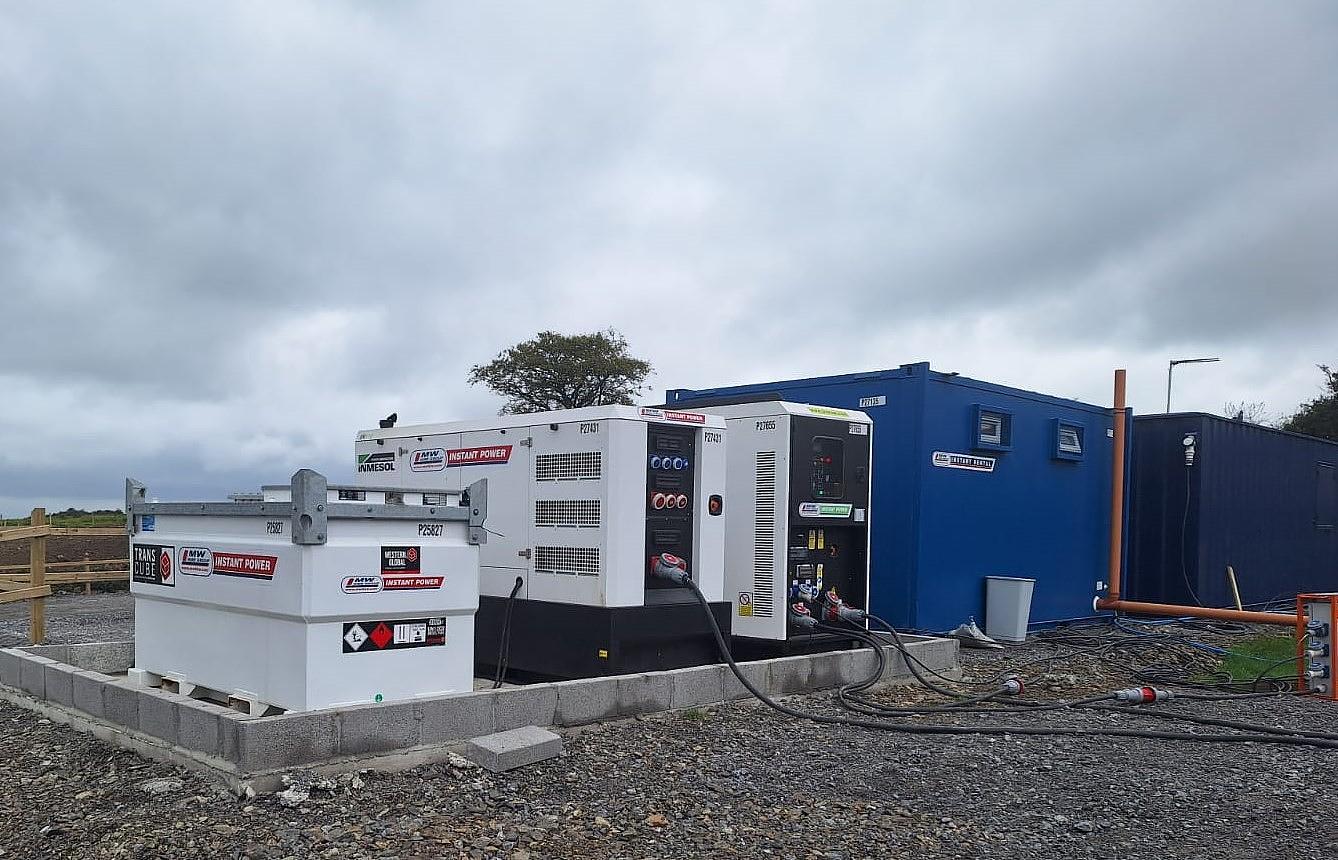
Diesel generators are often oversized to handle intermittent peaks—meaning they spend long periods running at low load. Low-load operation is inefficient, increases maintenance needs, and burns fuel without producing proportional usable power. A battery bank can handle short spikes and variable demand, allowing the generator to run fewer hours and at a steadier, more efficient load when it does run.
In hybrid generator-battery setups, the generator can be scheduled to run only when the battery needs charging, rather than idling continuously “just in case.” Over weeks and months, reduced runtime translates into meaningful fuel savings.
2) Lower Maintenance and Longer Equipment Life
Generator wear is closely tied to hours of operation, start/stop cycles, and low-load “wet stacking” conditions. By shifting more of the work to battery storage, sites typically reduce:
- Oil changes and consumables
- Unplanned repairs and callouts
- Downtime caused by maintenance scheduling
Battery banks can also reduce the need for multiple generators running in parallel, simplifying site logistics and lowering total cost of ownership.
3) Reduced Demand Charges and Better Use of Grid Power
For grid-connected sites, electricity bills often include demand charges based on the highest peak usage during a billing period. Short spikes—starting large motors, simultaneous tool use, temporary heating/cooling loads—can raise costs dramatically even if total energy consumption is moderate.
Onsite battery storage can perform peak shaving by discharging during those brief surges. The result is a smoother load profile and lower demand charges without changing how teams work.
4) Fewer Work Interruptions and Costly Delays
Power instability causes real productivity losses: tripped breakers, voltage drops, equipment resets, and time spent diagnosing “mystery” electrical issues. Battery banks provide rapid-response power that stabilizes voltage and frequency, helping sensitive equipment run reliably.
On projects where schedule penalties or tight handover dates apply, avoiding even a small number of interruptions can protect margins.
Operational Benefits: A Better Work Site Experience
Quieter Sites and Better Neighbor Relations
Noise is a common constraint—especially for urban builds, nighttime work, and projects near hospitals, schools, or residential areas. Battery-powered operation is significantly quieter than continuous generator use. Many sites use battery banks to support “quiet hours,” keeping essential loads running without complaints, restrictions, or costly work stoppages.
Cleaner Power for Modern Tools and Temporary Systems
Work sites increasingly rely on digital and electronic systems: site offices with IT equipment, security cameras, access control, charging stations for cordless tools, and temporary HVAC. Battery systems can deliver stable power that reduces the risk of damage or performance issues caused by fluctuating generator output.
Scalability and Flexibility as the Project Evolves
Load requirements rarely stay constant from groundbreaking to commissioning. Modular battery banks can be scaled up or down, moved within a site, or redeployed across projects. This flexibility can reduce the tendency to over-spec power systems early “to be safe,” which often drives unnecessary cost.
Environmental Benefits: Practical Sustainability with Measurable Impact
Reduced Emissions and Improved Air Quality
Every generator hour avoided reduces fuel burn and associated emissions. Battery banks help cut:
- CO2 emissions through reduced diesel consumption
- NOx and particulate matter, improving local air quality
- Onsite fumes, benefiting worker comfort and safety
For projects with environmental reporting requirements, battery storage also makes it easier to quantify improvements. Reduced fuel deliveries and fewer idling hours create a clear data trail.
Enabling Hybrid Power with Renewables
Solar is increasingly used on temporary sites for lighting, offices, and auxiliary loads. Battery storage makes solar more usable by storing energy produced during the day for evening or early-morning operations. Even a modest solar-plus-battery setup can meaningfully reduce generator reliance, particularly for steady loads.
Supporting Corporate ESG Goals and Bid Competitiveness
Many owners and public-sector clients now evaluate sustainability approaches during procurement. Demonstrating a plan for lower-emission temporary power—through construction site battery energy storage, hybrid generators, and reduced idling—can strengthen bids and align with corporate ESG commitments.
Where Battery Banks Deliver the Biggest ROI
While nearly any temporary power application can benefit, battery banks tend to deliver the strongest returns in these scenarios:
- Urban construction with strict noise and emissions expectations
- Sites with variable peak loads (cranes, hoists, dewatering pumps, welding)
- Grid-constrained locations where available service is limited or demand charges are high
- Projects with extended schedules where fuel and maintenance savings compound
- Night work requiring quiet, stable power for lighting and essential systems
Implementation Tips: Getting the Most from Onsite Battery Storage
To capture both cost savings and environmental benefits, successful deployments typically start with a clear assessment of site loads and operating patterns. Consider:
- Load profiling: Understand peak demand, average load, and when spikes occur.
- Hybrid strategy: Determine how batteries will coordinate with generators and/or the grid.
- Right-sizing: Avoid oversizing—match storage capacity and power output to real needs.
- Monitoring and controls: Use intelligent controllers to automate charging/discharging and generator start/stop.
- Safety and compliance: Ensure proper placement, ventilation requirements (as applicable), and site training.
Many providers offer turnkey solutions—battery bank rental, energy management, and performance reporting—which can simplify adoption for teams new to temporary energy storage.
The Bottom Line: Battery Banks Are Becoming a Standard for Smarter Site Power
Battery banks are no longer niche equipment reserved for specialized projects. As fuel costs, noise restrictions, and sustainability expectations rise, onsite battery storage is becoming a practical way to reduce operating expenses while improving the work environment and lowering emissions.
For contractors and site managers, the opportunity is straightforward: treat temporary power as a controllable cost center. With the right battery bank setup—often as part of a hybrid power system—work sites can run more efficiently, more quietly, and more responsibly without sacrificing performance.